
Academic
Designing for Mindful use of Cooking Oil
This project examined cooking oil consumption in Indian households, combining behavioral research and product design to promote healthier everyday choices.
Research
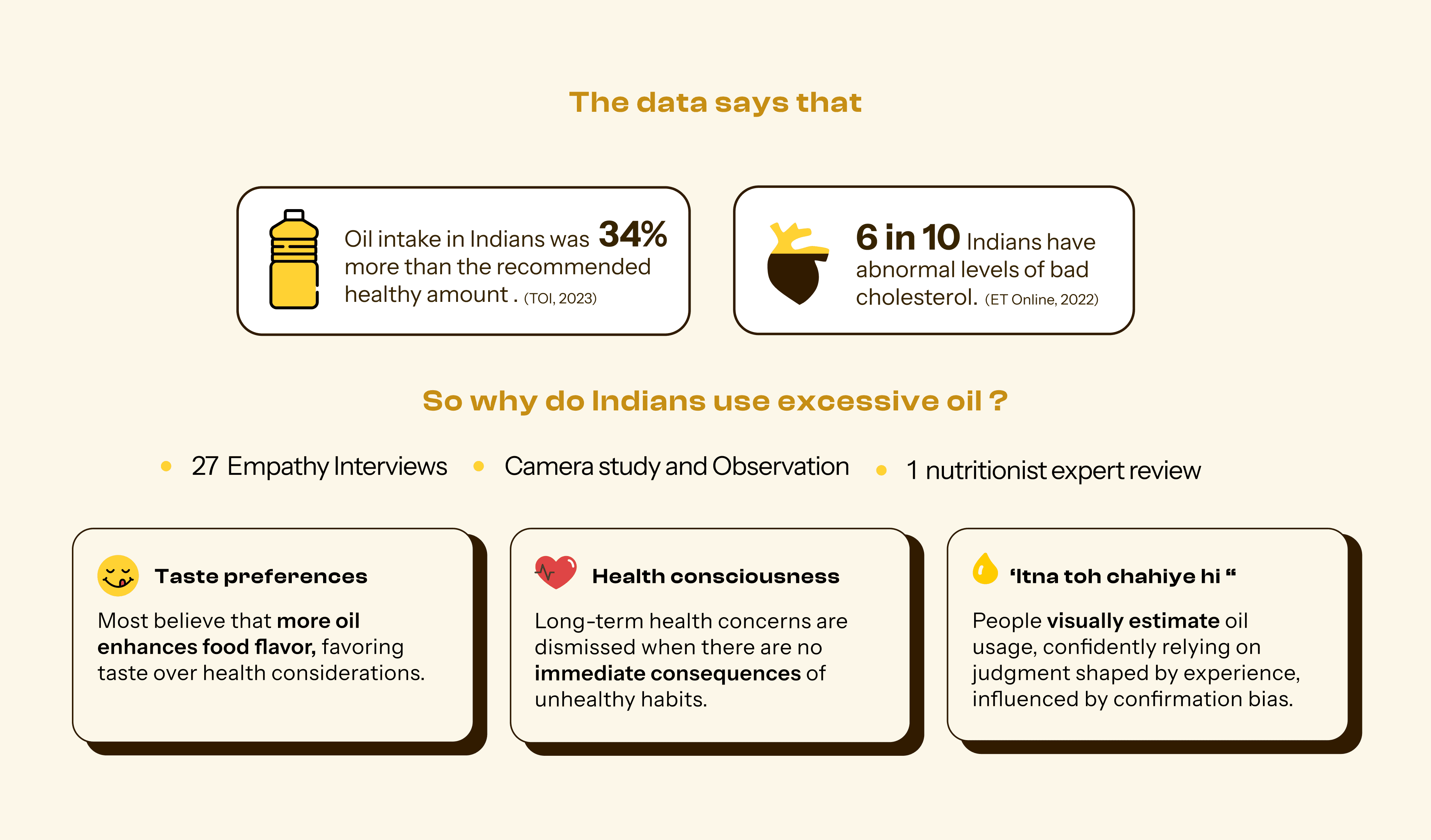
The project began with behavioral research to understand how oil is actually used in real kitchens, not how people say they use it. Primary research included empathy interviews, in-home observation, and a camera study of cooking sessions. Participants were observed while cooking to capture unconscious behaviors such as eyeballing quantities, pouring patterns, and storage habits. Photographs of stove areas, bottles, and dispensers helped map how oil fits into daily routines.
Secondary research focused on health studies, government surveys, and market reports to understand the larger context of oil consumption in India.
Behavioral design models such as Fogg’s Behavior Model and the Habit Loop (cue–routine–reward) were used to analyze why excessive oil use persists. The key insight was that oil usage is driven by convenience, habit, and cultural taste preferences rather than a lack of health awareness.
Iterations and Prototyping
Early concepts explored different ways of making oil usage more visible and intentional. These included emotional feedback through graphics, visible measurement systems, and mechanical interventions that slow down pouring.
Each concept was evaluated against behavioral principles, focusing on reducing friction, introducing a pause, and reinforcing positive behavior rather than restricting use.
Mid-fidelity prototypes were created to test interaction and usability - validating how users respond to controlled dispensing and measurement.
The final mechanism was inspired by medicine bottles, where dosage control is built into the act of use. This influence shaped a squeezing mechanism that allows users to measure oil into a top chamber before cooking, encouraging awareness without adding complexity.
A high-fidelity prototype was then developed as a working MVP to test the full interaction.

Final Concept
The final solution is a redesigned cooking oil bottle that promotes mindful usage through a daily measurement system. Instead of pouring oil directly into the pan, users squeeze oil into a measured chamber, creating a small pause and introducing intention into the action. This interaction reframes oil usage as a conscious choice rather than an automatic habit, aligning with behavioral design principles of habit disruption and positive reinforcement. To further reinforce mindful behavior, the bottle includes a heart-level indicator that visually reflects daily oil consumption.

Final Thoughts
This project helped me understand how behavioral design principles can be translated into a physical product. Concepts such as signifiers, affordances, feedback, and packaging were used to influence everyday actions without being prescriptive. By focusing on habits, cues, and moments of decision, the design introduces mindfulness into a familiar cooking routine. Instead of instructing users to consume less oil, the product creates space for awareness and choice, reinforcing how small, well-timed design decisions can support healthier behaviors.


